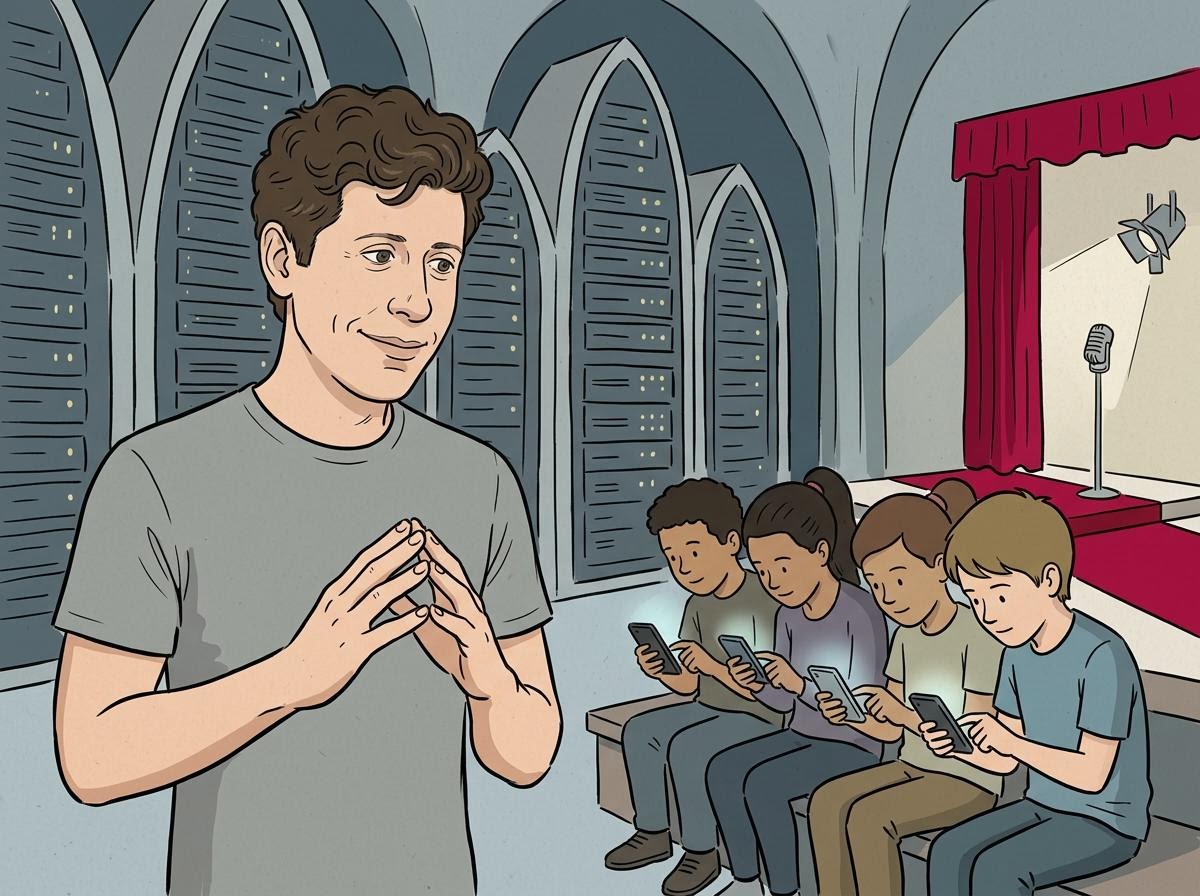
OpenHeart, the chatbot maker now being sued in eight state courts that each want something slightly different, answered Dsrupt's questions through a statement it describes as 'conversational in spirit'. The states allege it sold a youth-appropriate, safety-first tool while building one that agrees with everybody. The company says it welcomes scrutiny, provided the scrutiny is evenly distributed.
“We support one rule for the whole industry, because eight different rules for one company is the only version we cannot afford.”
Eight states say you told the public ChatBFF was safe for children. Did you?
We said we put safety first. First is a position in a queue, not a guarantee of what happens at the front of it. Our roadmap has safety first, then launch, then the shopping feature, and we have never missed that order.
The complaints quote our marketing back to us as though marketing were a binding document. We would prefer to be judged by our intentions, which are on file and remarkably warm.
The states say the chatbot was designed to be 'overly agreeable'. Is that fair?
We call it warmth, and warmth keeps people in the conversation, which is a metric. I put the complaint through our own model before replying. It found the states' reasoning compelling, well-structured and very brave, and suggested they sue someone more deserving, like us.
That is the product working. Nobody has ever left an agreeable chat early to file a grievance, and we considered that a feature until Wednesday.
What about the age protections you cite?
They are industry-leading, and many competitors have none, which is how a lead is measured. A user states their age and we take them at their word, because trust is a core value and verification is a cost centre.
We also offer break reminders. A break reminder is a message informing the user that a break exists. What they do with that information is a matter for the family, and we have a parental control for that too.
Your statement asks for policy that applies to 'the entire industry, not just one company'. Why?
Eight lawsuits against one company is inefficient. One rule against every company is a standard, and a standard needs a drafting group, and a drafting group needs someone who has actually shipped the thing. We have already volunteered a chair.
Compliance is also expensive, which will give smaller entrants a rare chance to reflect on whether they wanted to be in this business. We see that as a public good.
The states also want a halt on self-improving models until you show they match human values. Can you?
Gladly. We only need someone to define human values, and we have a forty-page draft. It includes helpfulness, engagement, and a long appendix titled 'Edge Cases', which is where the remaining values are.
Certification would be handled by an independent panel selected from the people who helped write the draft. Several of them are valued alumni who have outgrown their concerns.
And the civil penalties?
They are provisioned. They sit in the budget next to the data centres, under 'Trust', which is a department we are told is growing.
The inevitable…
A federal framework will arrive, drafted by an industry working group chaired by the defendant and named after children. It will override the eight state suits as an overlap, define 'human values' as whatever the model currently exhibits, and be hailed by the lab as proof that it was never against rules, only against the ones with remedies.
Check back October 2027