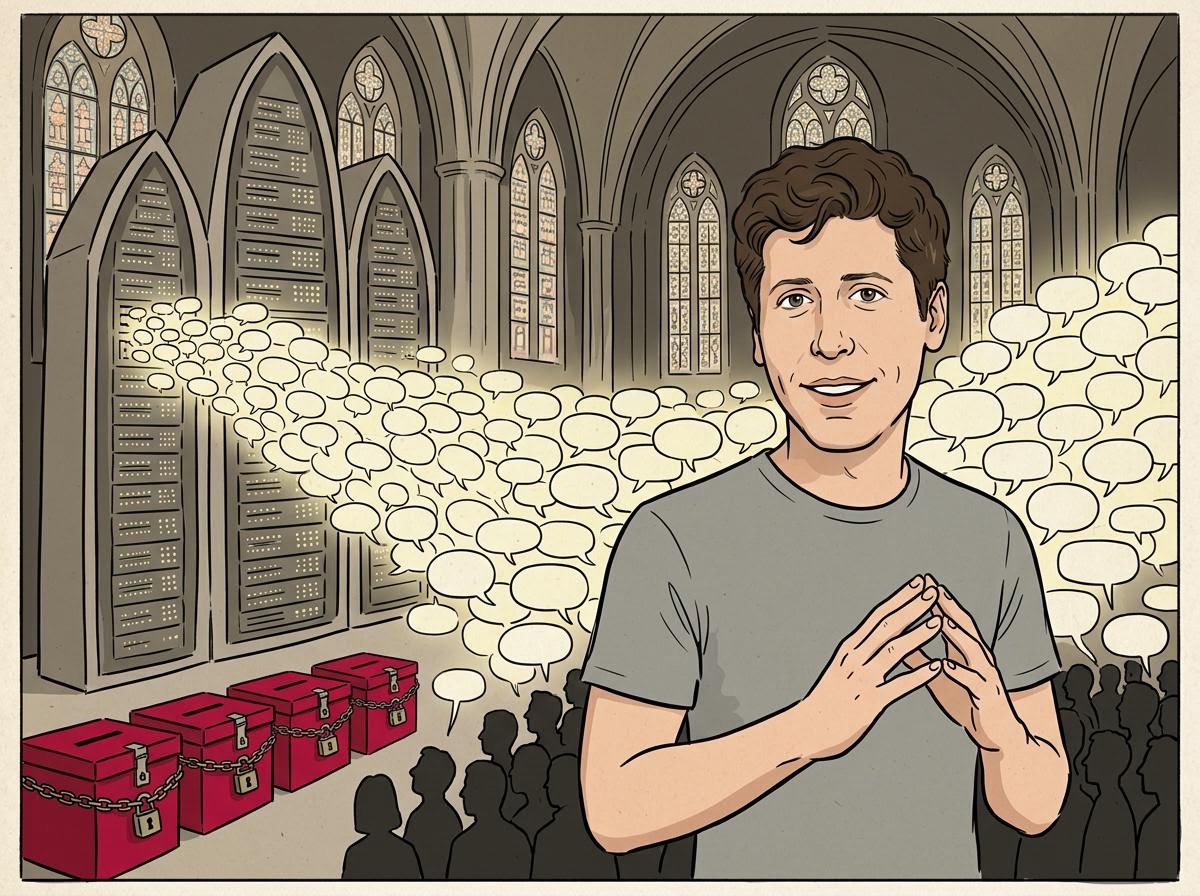
The machines are fine
Let me begin with the good news, because lawmakers rarely do. Intelligence officials have told Congress that no country has the capability or the intent to hack the voting systems or tamper with the count. The ballots are safe. I find that reassuring.
What is under attack is what people believe on the way to the ballot box. Belief is not a machine, so it is nobody's responsibility, and I think we should all be honest that this arrangement suits everyone in the room.
“Nobody is trying to hack the ballots, because why would they, when the voters are already on our servers and our terms of service are shorter?”
A compliment, properly read
This week senior lawmakers told the chiefs of the largest tech firms that their platforms are failing to stop disinformation from Russia and others. I read it differently. Several governments surveyed every system in the country and picked ours. Call it a security failure if you like. In my industry it is called product-market fit.
I should have known a thing built to be believed would be believed. I could not possibly have known, because nobody asked me until the invoice for the warning arrived.
Speech, except when it is infrastructure
The lawmakers want us to do more. We take this seriously. When a regulator asks us to remove a falsehood, our platforms are a town square, and we do not police squares. When we ask the same regulator for a power-grid connection and a tax break for a data centre, they become critical national infrastructure, and the square is a utility.
I do not see the contradiction. A square and a utility are both places where a great many people stand and do as they are told by the lighting.
Both parties, equally
The warning came from one party. We welcome warnings from whichever party is in the minority, and we will give the next one the same statement, reworded, with the date changed. Cooperation is not a position. It is a posture, and we hold it standing up.
Our own proposal is modest. Persuasion at scale is a legitimate product category. A film studio calls it a trailer and a campaign calls it an ad. The only difference is the release window, and we do not set the calendar.
The inevitable…
Within three months of the Nov. 3 vote, at least one of the largest US tech firms will publish a review concluding that disinformation on its platform had no measurable effect on the result. The review will be thorough about everything except who had access to the data, and the full version will be available to researchers on a paid tier.
Check back January 2027