What happened?
Turkey has published a regulation barring social media platforms from providing services to anyone under 15. It implements a law adopted in April and takes effect in November. Platforms must take 'the necessary technical and administrative measures, including age verification', to keep children out.
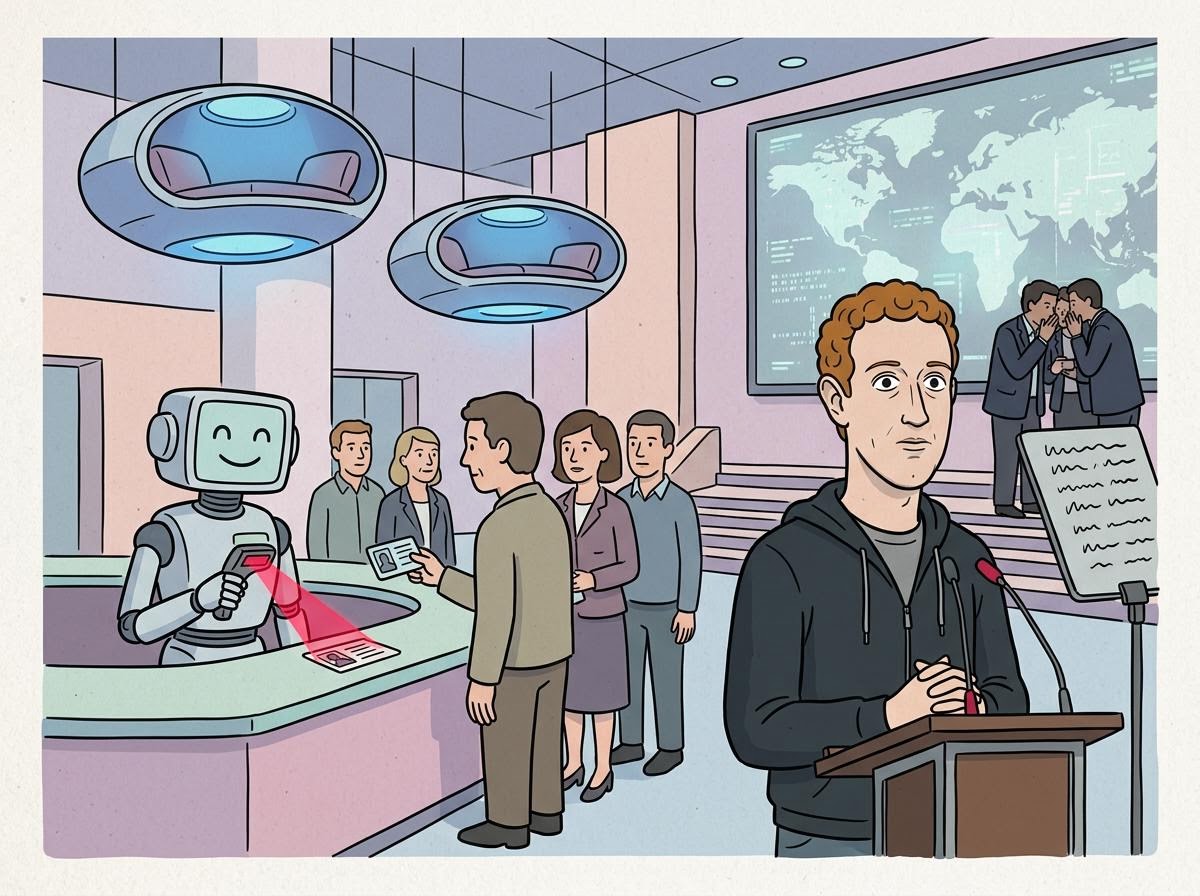
“For fifteen years we could not tell who was a child. Thanks to the government we will now know who everyone is, and we will hold the scans like family.”
How will a platform know how old I am?
It will ask. This is new. Feta, the social network whose internal research has long documented exactly how old its users are, has until now maintained that age is a self-reported mystery, like height on a dating profile. A twelve-year-old who typed 1987 was a thirty-nine-year-old, and the company accepted this with the serenity of a bouncer who has been paid to be fooled.
From November, the mystery ends. Platforms will need a document, a face scan or a bank-linked check, and not only from children. A ban cannot be applied to under-15s without examining over-15s, which means every adult in the country must now prove to a social network that they are not a child.
Who wins?
Feta, mainly. For fifteen years it has pursued verified identity, the most valuable thing an advertiser can be sold, and been refused by users who found the request intrusive. The state has now made the request mandatory and attached a child-protection slogan to it.
Marc Humanberg, Feta's chief executive, who prefers to answer questions before they are asked, said the company 'has always believed in protecting children, and has simply lacked a legal reason to confirm which ones they are.' He added that the verified documents would be stored 'with the same care as everything else', and took no questions, which the company described as a safeguard.
Who else wins?
Paladin Analytics, the defence-adjacent contractor that sells joined-up databases as 'platforms', is understood to regard national age verification as a natural opening. A registry that links accounts to documents is, in its terminology, 'just another dataset'. A spokesperson said the company was 'not in a position to comment on children', and was 'very much in a position to discuss community resilience'.
Who pays?
Adults pay with their documents, and families pay with the time spent explaining to a nine-year-old why a face scan failed. Children pay least, since the standard workaround, borrowing an older relative's face, has so far outperformed every verification vendor.
The platforms will pay a compliance cost, which they will describe as a burden and recover through the value of the new data. A fine for failing to verify age is cheaper than the contract that comes with verifying it.
Should I worry?
Not about the children. They are under 15 and, officially, no longer there. Worry, if you must, about the register of verified adults now being assembled by companies whose last child-safety effort was a research file labelled 'learnings'.
Feta confirmed it welcomes the regulation. 'For fifteen years we could not tell who was a child,' it said in a statement. 'Thanks to the government, we will now know who everyone is, and we promise to hold the scans like family.'
The inevitable…
In November the first adults will be asked to prove they are not twelve, and the first twelve-year-olds will prove they are their uncle. Platforms will report millions of 'verified users' as a child-safety milestone and an advertising product in the same quarterly call. Other governments will adopt the same wording, 'including age verification', and the identity register will be built one protective regulation at a time, by the companies that were supposed to be restrained by it.
Check back October 2027